


This case study was enabled by a RICHeS Access Fund Catalyst Award.
“This project provided us with a greater understanding of our film archive and inform our future conservation and preservation practice, and it enabled English Heritage to develop conservation techniques for the management of high-risk audiovisual materials to use with their own collections and to roll out for use by other heritage organisations.”
Thomas Poole, Archivist at the British Motor Industry Heritage Trust
Preserving automotive film heritage
The British Motor Industry Heritage Trust (BMIHT) Archive holds one of the world’s largest collections of automotive heritage materials, including more than 7,500 historic film reels documenting the history of Britain’s iconic motor history.
Many older films were created using cellulose nitrate or cellulose acetate materials, both of which deteriorate over time. If not identified and managed appropriately, these films risk damage resulting in permanent loss of historical significance. At the same time, specialist cold storage required for preservation is costly and energy intensive, making it important to identify which films require the highest levels of protection.
Through the RICHeS Access Fund Catalyst Award, BMIHT Archive worked with the English Heritage national integrated mobile and fixed lab facility to find an innovative solution to support their conservation. As part of the collaboration the British Film Institute, that will be opening the RICHeS-funded BFI National Archive Moving Image Conservation Research Laboratory (MICRL), provided advice and samples of films with different degrees of degradation.
Informing collections care through heritage science
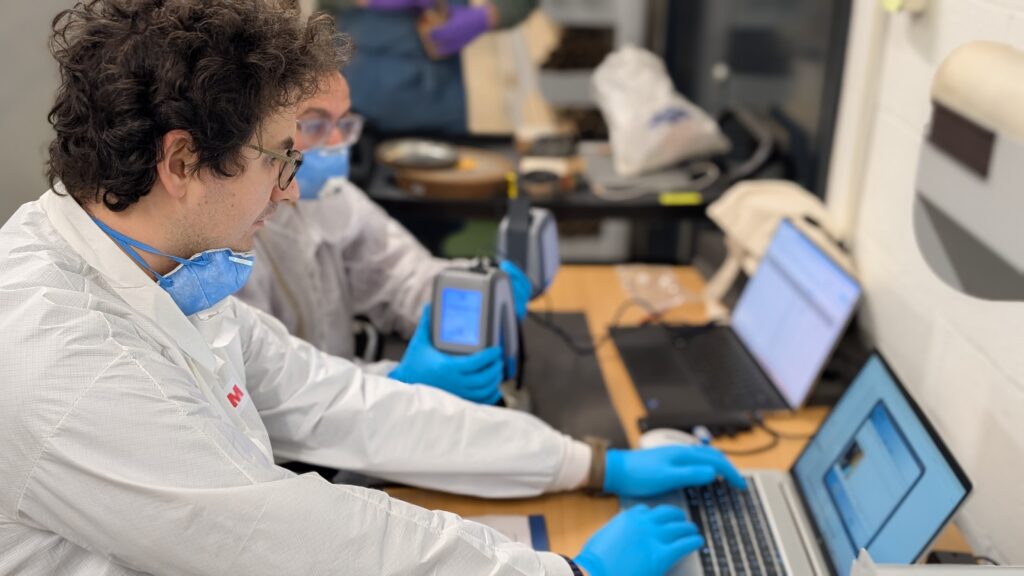
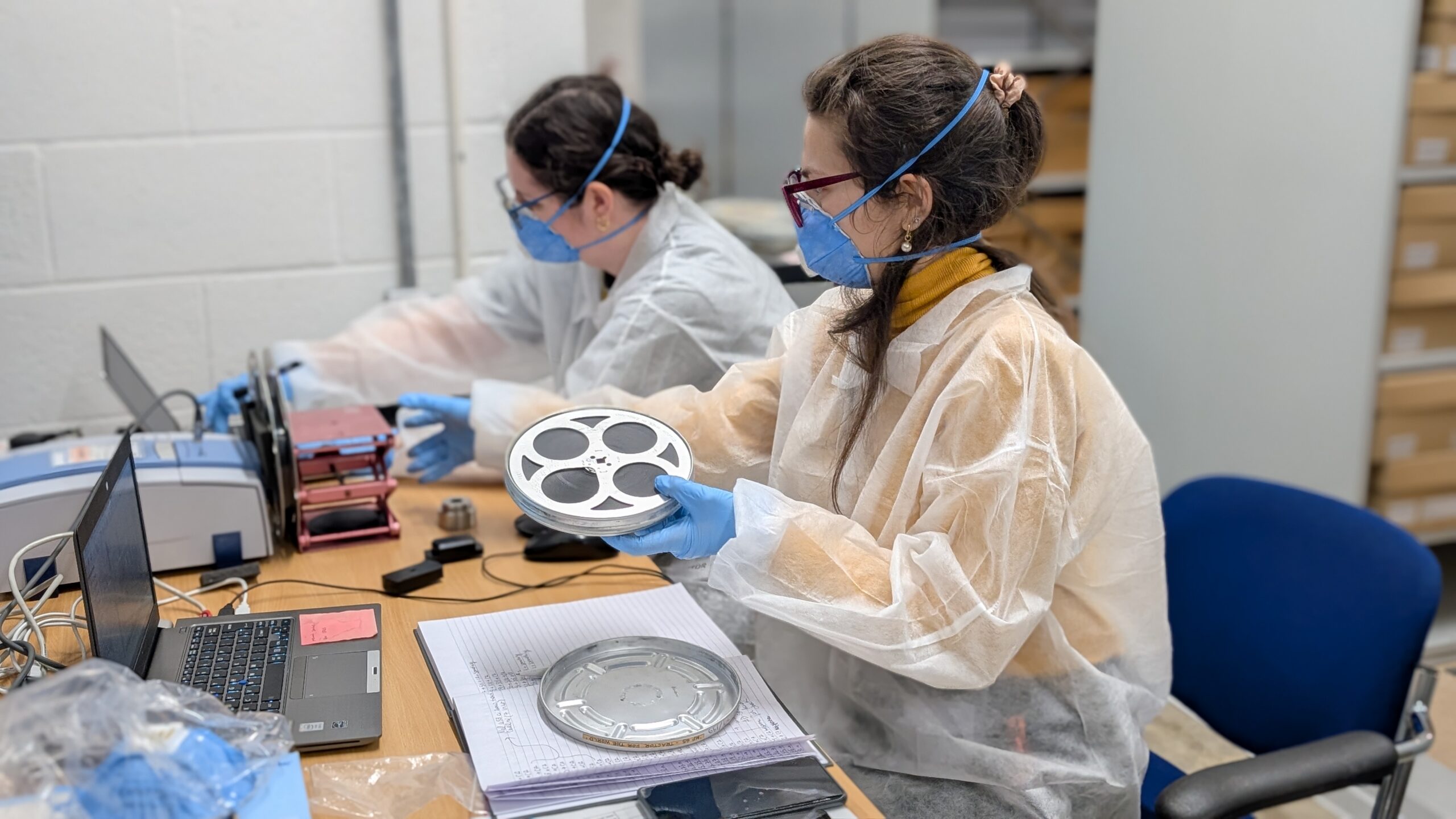
The BMIHT Archive team and volunteers worked alongside four scientists from the facility to undertake a large-scale survey of the collection. On site at the British Motor Museum, they used two mobile Fourier Transform Infrared (FTIR) spectrometers to identify what the historic films were made from. FTIR is a powerful analytical technique used on a broad range of asset types to determine chemical composition.
Over a five-day period, the team analysed 950 films. The survey successfully identified cellulose acetate and unexpectedly some cellulose nitrate films. The BMIHT has used this project as a springboard to revise and craft an updated, accurate catalogue of their film collection and its condition, and to leverage the results into a wider condition survey of material within the archive. The new knowledge gained from this research enables better preservation of these historic films, making previously hidden heritage more accessible, discoverable, and protected for future generations.
Developing an innovative and efficient methodology for the sector
The collaboration enabled the development and testing of a new scientific approach to rapidly identify film materials without removing them from their storage reels or taking physical samples. Using a new FTIR method, the research team successfully analysed the film in the can with the top removed, but without unspooling the film by analysing through the holes in the spool. This significantly increased efficiency and productivity, as well as supporting safety for conservation and storage of the highly flammable cellulose nitrate films.
The success of the project demonstrated not only how scientific innovation can help heritage organisations manage large collections more effectively, but also that large scale condition assessment can be undertaken far more rapidly, supporting faster decision making.
The scalable and transferable methodology is already being demonstrated through hands-on workshops and presentations, increasing its reach and enabling heritage organisations to benefit from faster, safer and more cost-effective film assessment. In October 2026 it will be shared at the Infrared and Raman Users Group international conference in the US. The manufacturer Agilent is also developing a standard method using this approach to be shipped with the FTIR spectrometers, embedding it in conservation practice.
This case study demonstrates how heritage science can help organisations identify risks more efficiently, make better-informed preservation decisions, and safeguard vulnerable collections for future generations while making more effective use of limited resources. By developing a practical solution to a longstanding problem, it demonstrates how access to research infrastructure can deliver tangible benefits for the heritage sector, reducing the time, cost and risks associated with collection conservation.