


Organisation: Queen’s University Belfast
Principal investigator: Patrick Gleeson
Investment Overview
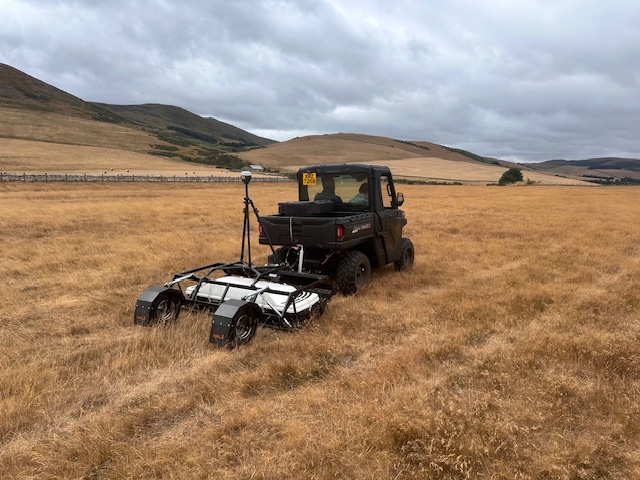
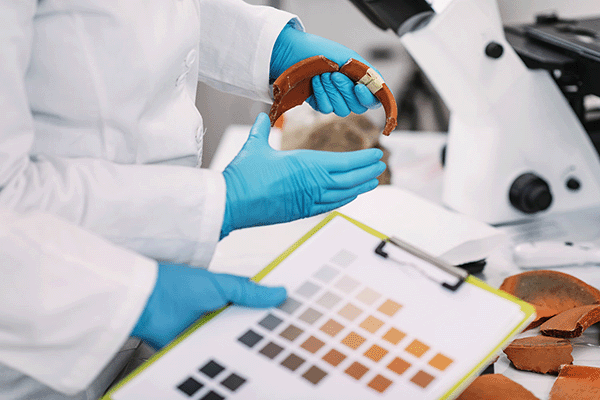
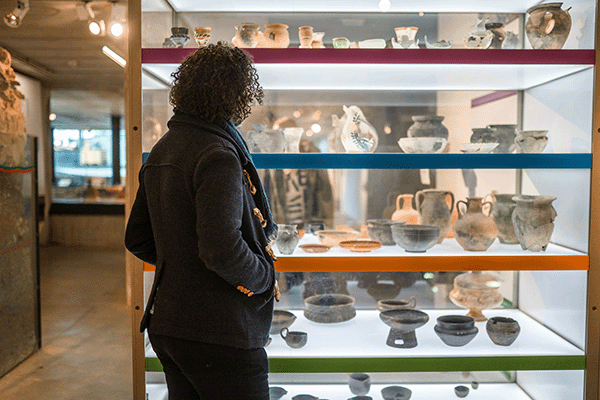
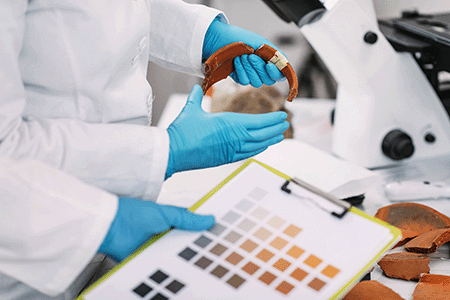
The Institute for Heritage and Environmental Science (IHES) provides access to world-leading facilities and expertise in heritage, conservation and environmental science at Queen’s University Belfast. The institute’s capabilities span chronological science — including standard and ramped pyrolysis radiocarbon dating, tephrochronology, dendrochronology and lead-210 dating — alongside isotope geochemistry, materials characterisation, remote sensing, and environmental reconstruction. Through tailored, minimally invasive analyses, IHES supports research on archaeological, museum and natural history collections, including bone, skin, textiles, wood, environmental samples, ceramics, metals and plaster, with a particular specialism in conserved or consolidated materials. IHES works collaboratively with academics, GLAM, community and commercial partners across Northern Ireland, the wider UK and internationally.
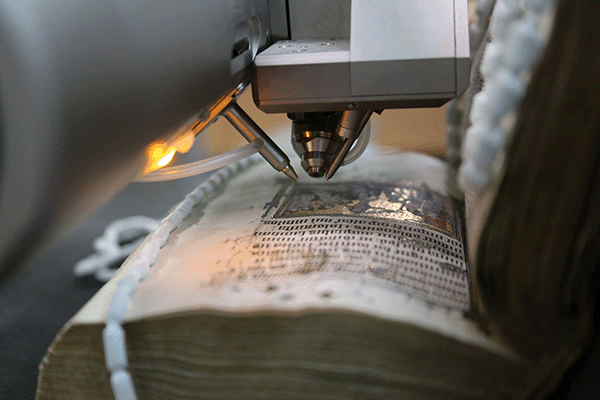
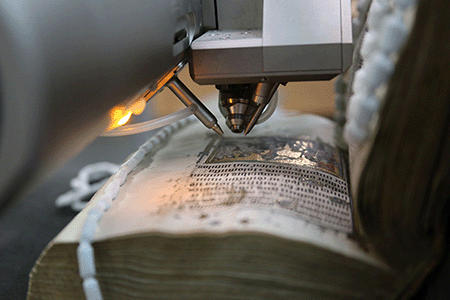
RICHeS investment has enabled the IHES to enhance capabilities and develop innovative analytical methods to address challenges, opening new opportunities for world-leading research and practices. The facility is becoming a globally recognised centre for expertise in the chemical characterisation of conserved museum collections by using TG-MS, FTIR and XRF analysis to resolve treatment histories and design appropriate analytical and conservation approaches. Ramped pyrolysis has then enabled these contaminants to be isolated from endogenous carbon sources for more accurate radiocarbon dating. Micro-CT scanning facilities have also enabled the non-destructive investigations of objects internal structures to better understand object manufacture and use, and the creation of 3D models.
Explore More
Visit the HSDS Catalogue of Services for information on services available to access.