
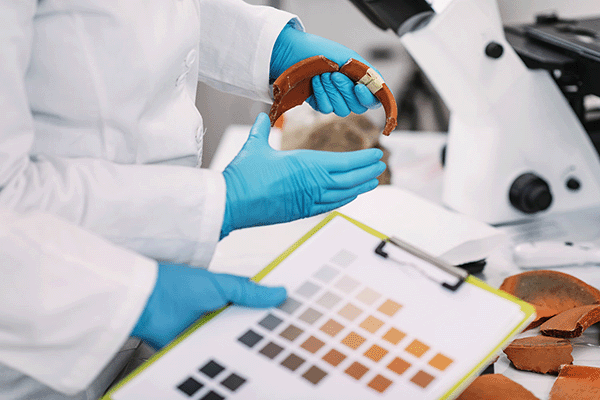
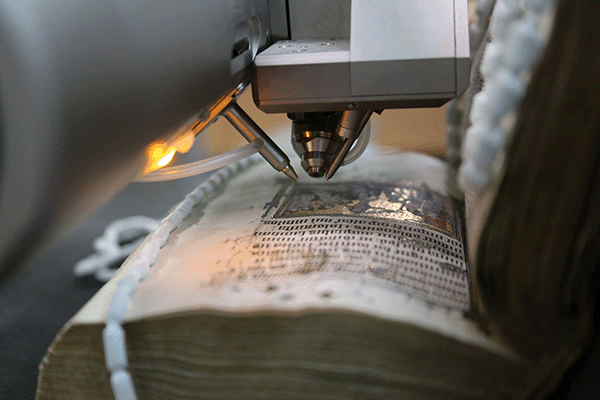
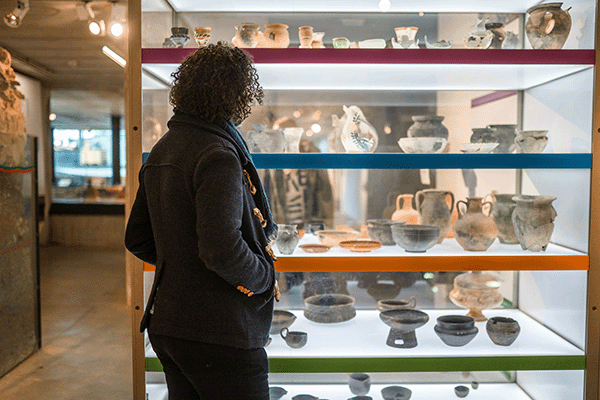


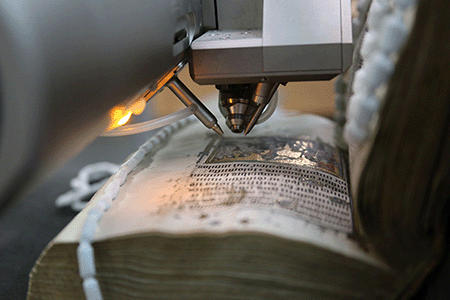

Members from both the RICHeS and AHRC Infrastructure teams recently visited the Science Museum Group at the Science and Innovation Park near Swindon. They met with the team delivering the RICHeS collections investment Empowering safety: hazardous materials awareness, identification and management, led by Michelle Stoddart, Head of Conservation and Collections Care, and Dr Fiona Brock, Group Conservation Scientist. As well as providing high level guidance on hazard management for collections and developing hazard type and material taxonomies, this project is creating a study collection of hazardous materials and a comparative reference dataset to systematically address hazards in heritage collections. This will protect the artefacts and the people who care for them, as well as opening up access to collections.
Supporting collections management within a new facility
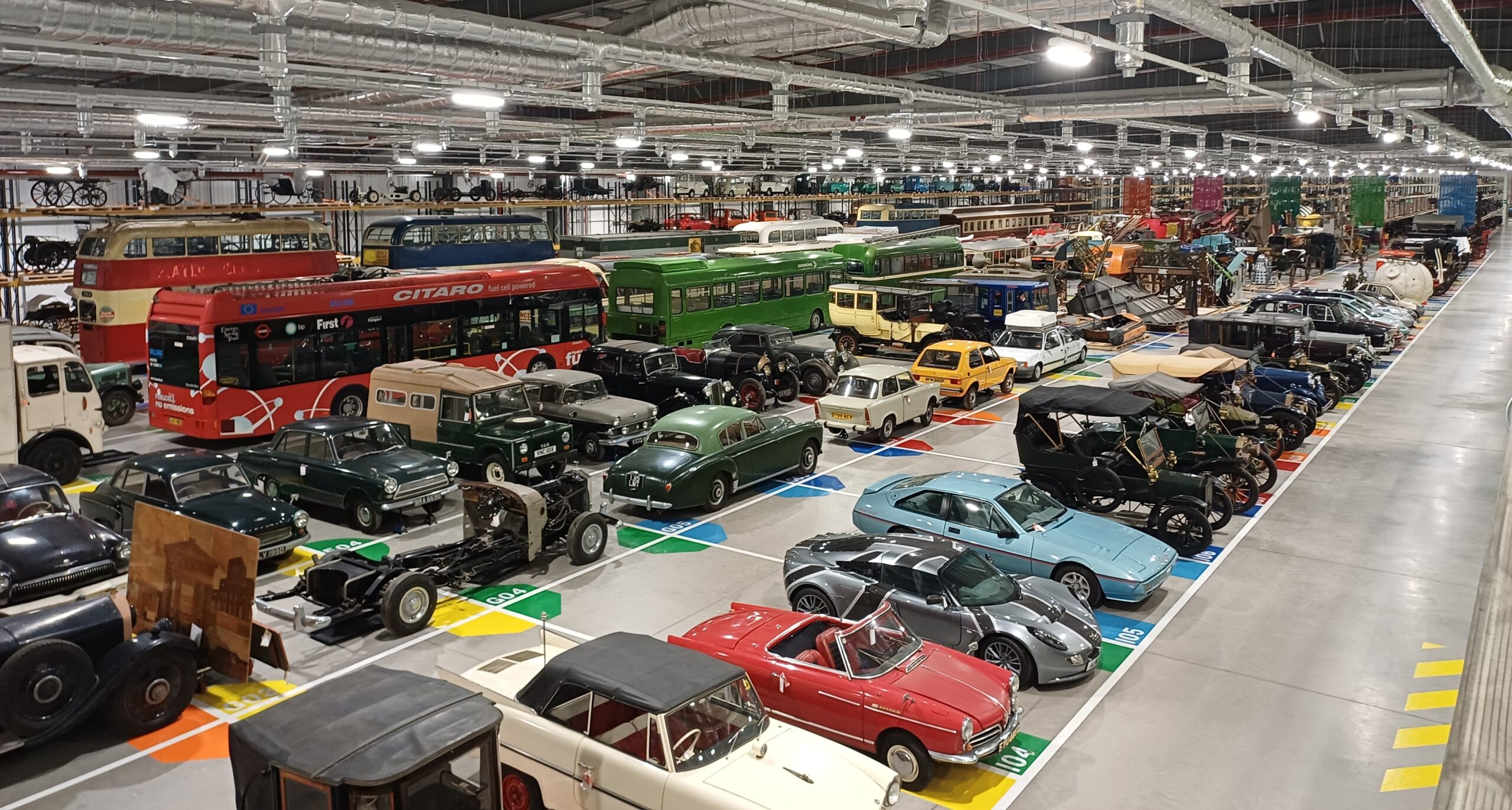
The collections are housed within the Hawking Building, which opened in 2024 after the £65 million One Collection Programme and can be visited on public tours. The building holds over 300,000 objects of all sizes, materials and backgrounds. Included in the collection is the entire office of Professor Stephen Hawking, whom the building was named for in recognition of his scientific research and public engagement.
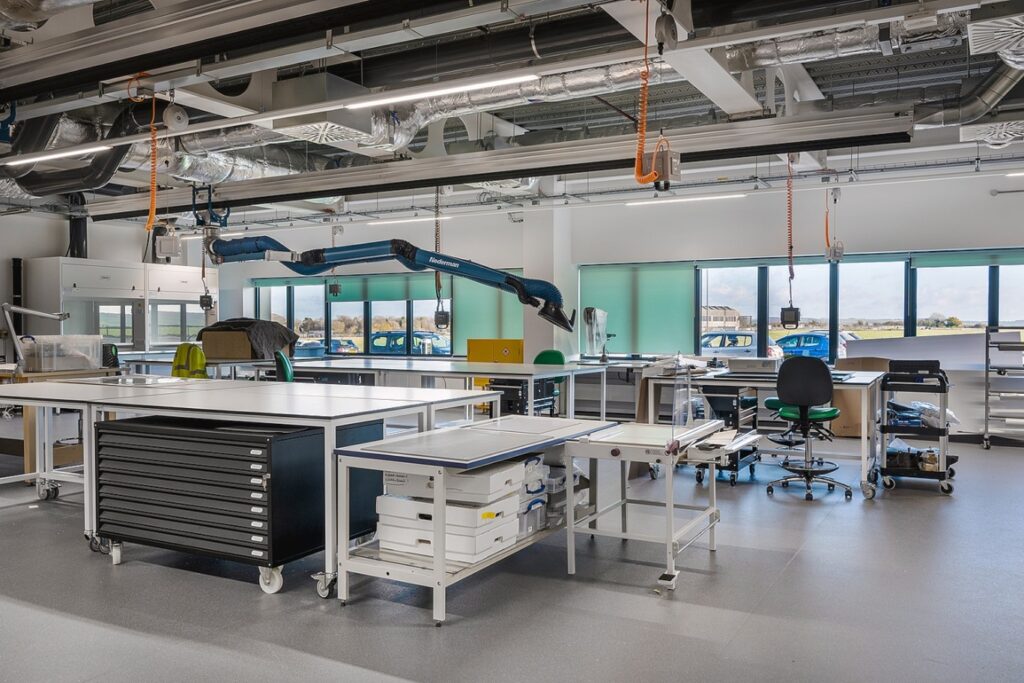
The RICHeS investment will unlock new capabilities across the conservation facilities and specialist stores, delivering new research bench spaces within the conservation laboratory and a new fume cabinet within the specialist stores. These improvements will greatly support researchers and colleagues, enabling the safe and effective study of objects in situ and strengthening capacity for conservation and scientific research.
Empowering safety through sharing knowledge
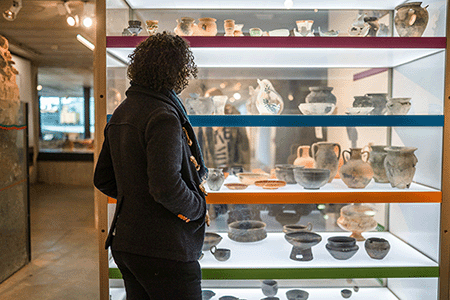
Within these vast collections, the small number of carefully identified and labelled historic hazardous materials housed in glass jars represent just one aspect of this ongoing work. The diverse nature of the Science Museum Group’s collections offers valuable insight into the wide range of hazards encountered by museums, from asbestos, poisoned arrows, and historic medicines, to radioactive paint on dials and compasses, historic chemicals, and emerald green textiles, to name just a few. The knowledge generated through this project, and its dissemination across the sector, will deliver lasting impact. By improving understanding, confidence, and consistency in the identification and management of hazardous materials, this work will provide an invaluable resource for museum professionals working with complex and potentially dangerous collections.
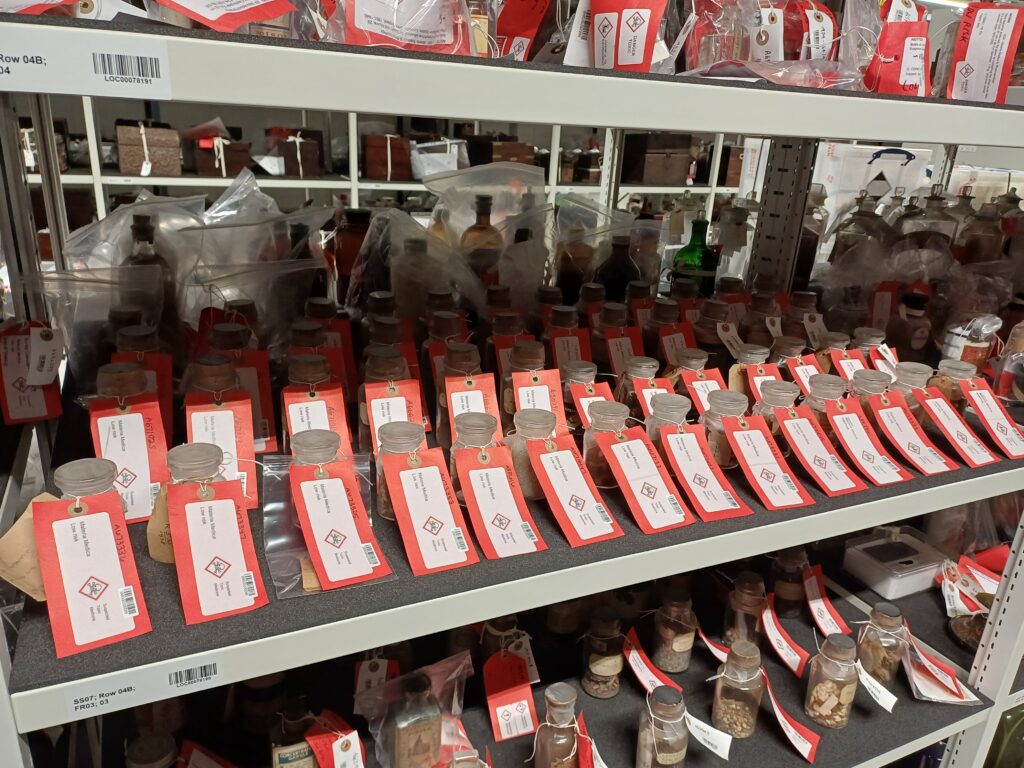
As you may have seen in our One Year blogs, The Science Museum Group team have recently worked with the Environment Agency to advocate for a newly published regulatory position statement for the museum sector on retaining and safely managing polychlorinated biphenyls (PCBs). Empowering safe collections management is at the heart of this investment and we look forward to sharing more as the project develops.
Michelle Stoddart shares:
“This investment has enabled us to better understand the hazards within our collections, and, crucially, to build the capacity to act on that knowledge. The dedicated staffing resource to develop and then facilitate access has been transformative: it has allowed us to clean and enrich our data, establish a shared taxonomy, and, importantly, bring in a conservation scientist with specialist expertise. Their presence strengthens and uplifts our existing team, supporting skills development in scientific analysis, research, and publication. This capability will ripple outward, enhancing our practice, deepening confidence across the sector, and ultimately ensuring hazardous collections can be managed and accessed safely for generations to come. The team welcomes enquiries from potential collaborators from the sector, academia and beyond wishing to work with us and access the collections for research relating to historic hazardous materials, including through the RICHeS Access Fund.”