
This case study was enabled by a RICHeS Access Fund Catalyst Award.
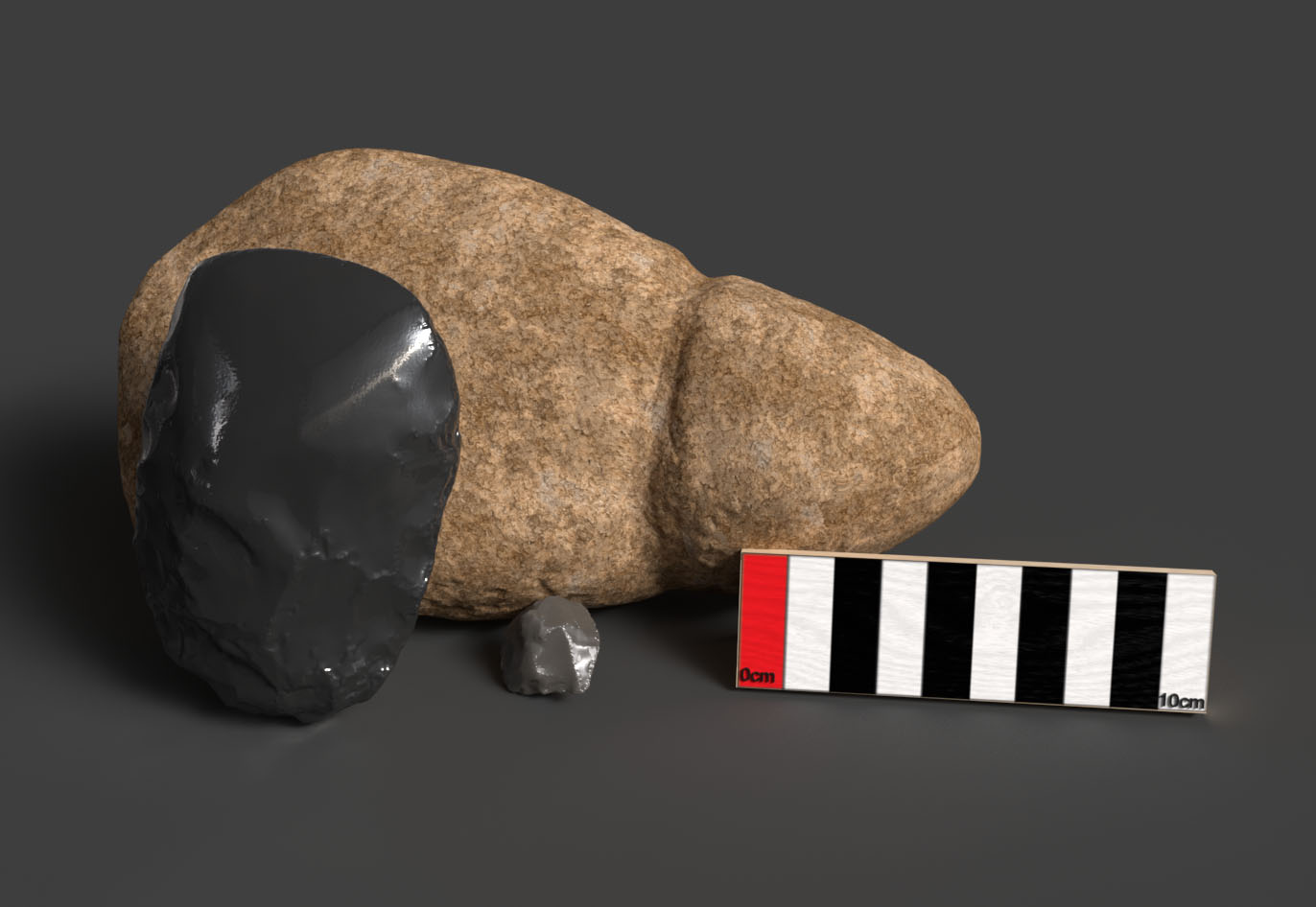
“This has been such an exciting project for the museum team to be involved with. We’ve been able to understand our collections better, such as seeing the detailed images on our hoard of Roman coins for the first time and feeling the tool marks on the flints that have been 3D printed larger scale. We’re planning some object handling sessions for the autumn with a new volunteer and look forward to our visitors experiencing these objects in new accessible ways.”
Rachel Cornes, Portland Basin Museum
Advancing engagement for visitors
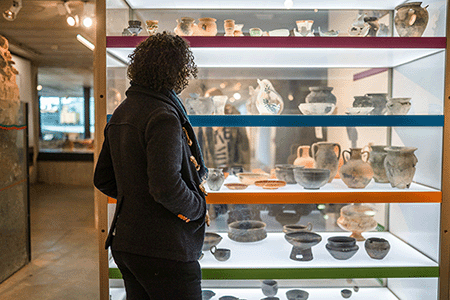
Many museum collections can only be experienced visually, often displayed behind cases for their protection. Through the RICHeS Access Fund, the Portland Basin Museum, in Greater Manchester, and the Centre for Digital Modelling and Analysis for Cultural Heritage (DMACH) at Manchester Metropolitan University collaborated to make artefacts more accessible.
The team identified priority elements of their physical collections, digitised them through a variety of 3D modelling techniques and produced 3D printed replicas. Innovatively braille dots were also printed on appropriate artefacts. Their solution enables visitors, particularly blind and partially sighted audiences, to meaningfully engage with and understand archaeological artefacts. Access to DMACH’s specialist digitisation facilities and expertise enabled Portland Basin Museum to test approaches that would otherwise have been difficult to deliver.
Selecting artefacts and techniques
The Museum’s Tales of Tameside gallery focuses on how Tameside has developed since the earliest settlers. Supporting engagement with this past, the work focused on two types of objects as highest priority for digitisation and reproduction. Firstly, representative artefacts from their local prehistoric archaeological collection, strengthening engagement with local histories. Secondly, objects in storage and not on public display, unlocking access to more of the collection.
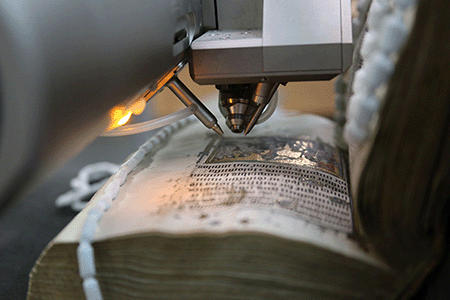
The team used a range of advanced digital imaging and scanning techniques to create highly accurate 3D models of artefacts including photogrammetry and blue-light laser scanning. They deployed the most appropriate tools for the artefacts that included coins, portable small artefacts and larger non-portable objects.
Embedding accessibility through digital reproduction
By designing a visitor experience-led workflow for digitisation and 3D reproduction, the DMACH team was able to align technical processes more closely with the needs and priorities of museums, demonstrating that effective object digitisation is not a one-size-fits-all approach. This work generated valuable practice-based knowledge, including the finding that not all objects are suitable for reproduction with embedded braille, and that resin-based 3D printing offers the best solution for producing durable, legible braille due to its superior vertical resolution.
These insights have directly informed the creation of accessible 3D models that allow visitors to explore collections through touch as well as sight, improving understanding of artefacts’ physical characteristics, material composition, provenance and historical significance. The collaboration also highlighted the importance of accurately replicating object weight to support authentic, multi-sensory engagement.
Together, these innovations make collections more inclusive, enabling blind and partially sighted audiences to access object information and scientific analysis independently through embedded braille. By embedding accessibility into the reproduction process, the case study has demonstrated a scalable approach to widening participation and enriching museum experiences. Visitor feedback gathered by Portland Basin Museum will help evidence the longer-term impact of this innovation on audience engagement and learning.
By combining heritage science, digital technology and accessibility-focused design, this case study demonstrates how museums can utilise RICHeS to unlock new ways of engaging with collections, creating richer and more inclusive experiences for all visitors.