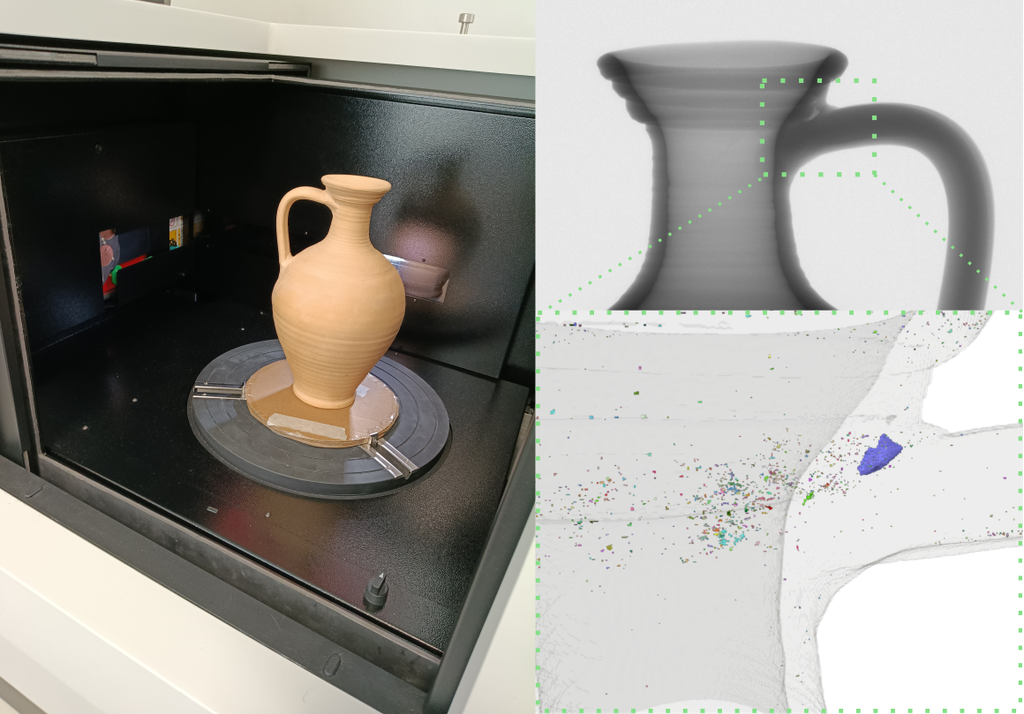
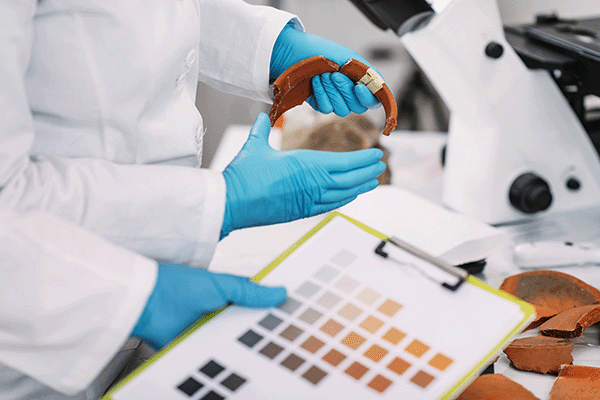
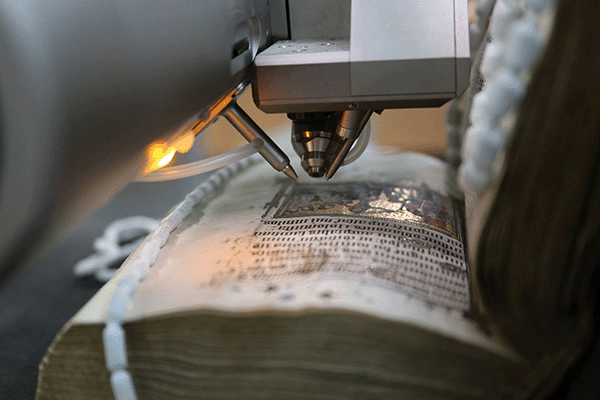
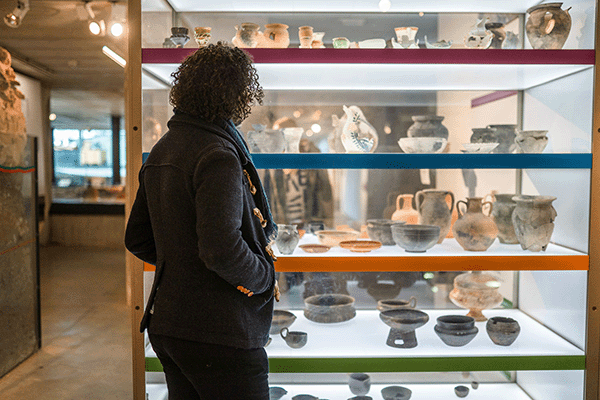



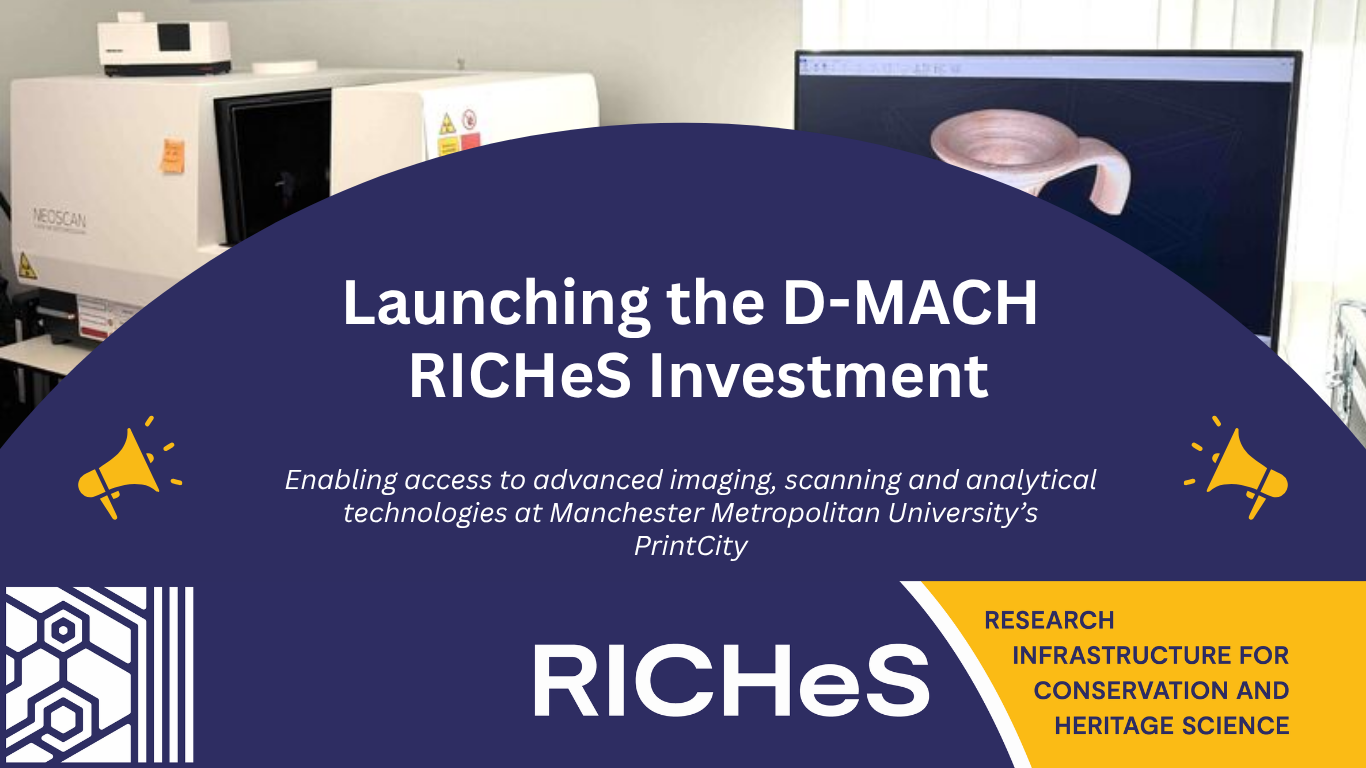
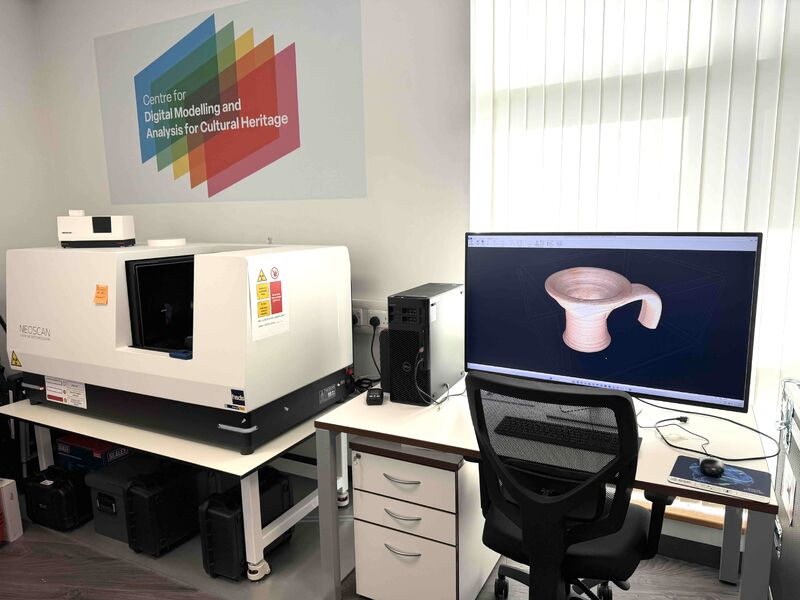
The Centre for Digital Modelling and Analysis, for Conservation and Heritage (D-MACH) RICHeS-funded investment at Manchester Metropolitan University is now open for access. This state-of-the-art digital heritage facility brings together advanced imaging, scanning and analytical technologies that can reveal details invisible to the human eye, from inscriptions on ancient artefacts to the contents of sealed objects. Located in Manchester Metropolitan University’s PrintCity advanced manufacturing facility, the team are ready to help museums, archives and heritage organisations by discovering the hidden histories hiding within their collections.
Opening for new collaborations
On 14 October 2026 the D-MACH team hosted a launch celebration, welcoming guests from across the heritage sector, representing the types of organisation D-MACH aims to support. Attendees included self-employed heritage professionals to local archivists and conservators, and representatives of English Heritage and the National Trust. D-MACH was also delighted to invite Andrew Lornegan of Wonderful Scientific, in recognition that the Centre hosts the first Neoscan XL micro-CT scanner ever deployed in the UK. Attendees enjoyed tours of the new facility, case studies from activities already undertaken, and a keynote address by Jack Kirby Associate Director of Collections Service at the Science Museum Group.
Ben Edwards, Professor of Heritage and Archaeology, said:
“It was great to welcome guests and invited speakers from the AHRC, local museums, and our scientific partners. We hope the event will open the doors to exciting future collaborations and new partnerships from across the heritage sector.”
One case study shared was enabled by a RICHeS Access Fund Catalyst award and involved creating detailed 3D scans of artefacts in Portland Basin Museum, in Greater Manchester. The models were reproduced through 3D printing so that visitors are able to handle accurate replicas. The team are also testing embedded braille onto the surface of some of the prints, so that blind and partially sighted people can learn about the objects through touching them.
Enabling access to advanced capabilities in digital modelling
The facility is designed to support researchers and heritage organisations by providing access to specialist equipment that is often beyond the reach of smaller museums and cultural organisations. The technology available to access can be used to create highly detailed digital models of heritage objects, buildings and landscapes, while also helping experts to examine fragile artefacts without causing damage. Among the new Centre’s capabilities is advanced micro-CT scanning technology, which can be used to look inside objects without opening them, revealing the contents of sealed archaeological finds.
Paul Bason, Reader in Digital and Creative Industries, said:
“Many museums and heritage organisations hold fascinating objects in their collections but often lack access to the specialist technologies needed to fully understand them. D-MACH will give organisations access to world-class equipment and expertise, helping to uncover new knowledge about our shared heritage and ensuring it can be preserved for future generations.”
If you are interested in working with D-MACH to explore your collections, visit the HSDS Catalogue of Services, their website, or contact the team on dmach@mmu.ac.uk.