

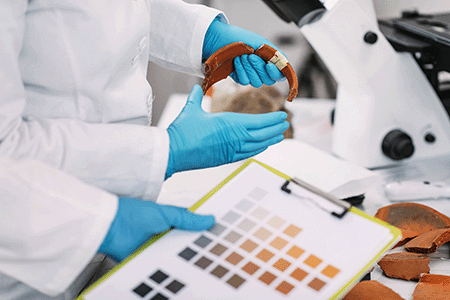
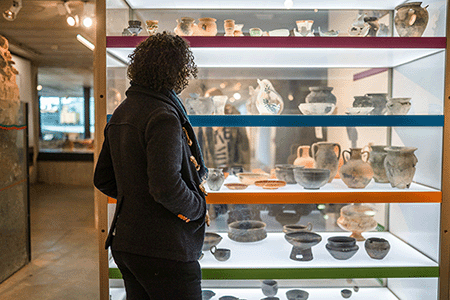

The RICHeS-funded investments at Tate – Accessing Modern and Contemporary Contemporary Art Materials Research and Establishing Tate’s Conservation and Heritage Science Archive (CHSA) – are now open for access.
To celebrate this, on 26 August, Tate hosted an online soft launch to highlight these two RICHeS-funded investments, that form part of the RICHeS distributed infrastructure connecting collections, facilities, and expertise across the UK to support world-leading heritage science research. The event included insights into key achievements across the 2024-26 build phase involving access case studies conducted with project partners the National Trust and the Courtauld Institute of Art. This marks the transition to the operational phase, that will enable access to external researchers and advance knowledge of modern and contemporary art.
Enhanced research facilities and collections
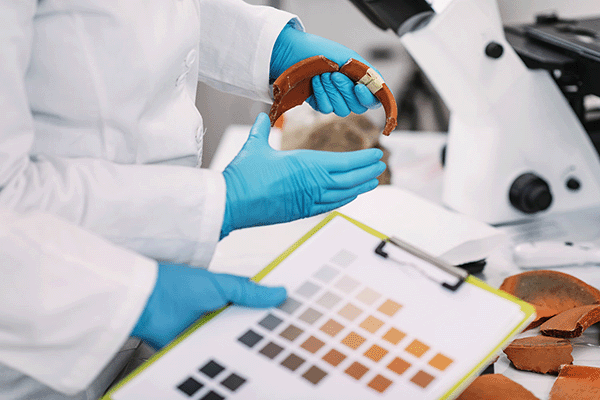
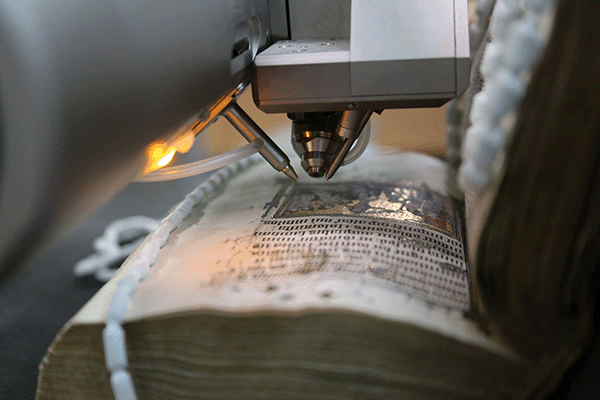
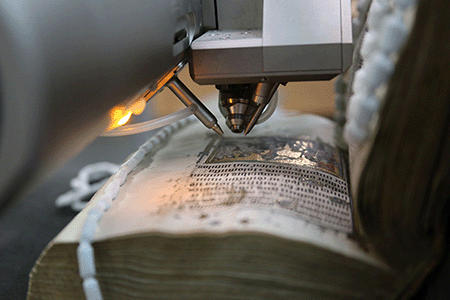
Building on AHRC Capability for Collections (CapCo) awards, RICHeS investment has provided a range of imaging and chemical analytical techniques for the identification of materials in works of art, including the RICHeS-funded volatiles GCMS, Raman spectroscopy, laser infrared imaging system and a new microfader. This suite of instruments, combined with expertise at Tate in twentieth-century paints, plastics, polymers, and innovative cleaning science helps researchers to better explore and understand twentieth and twenty-first century works of art, including those containing new, lesser-known, degradable and other novel materials.
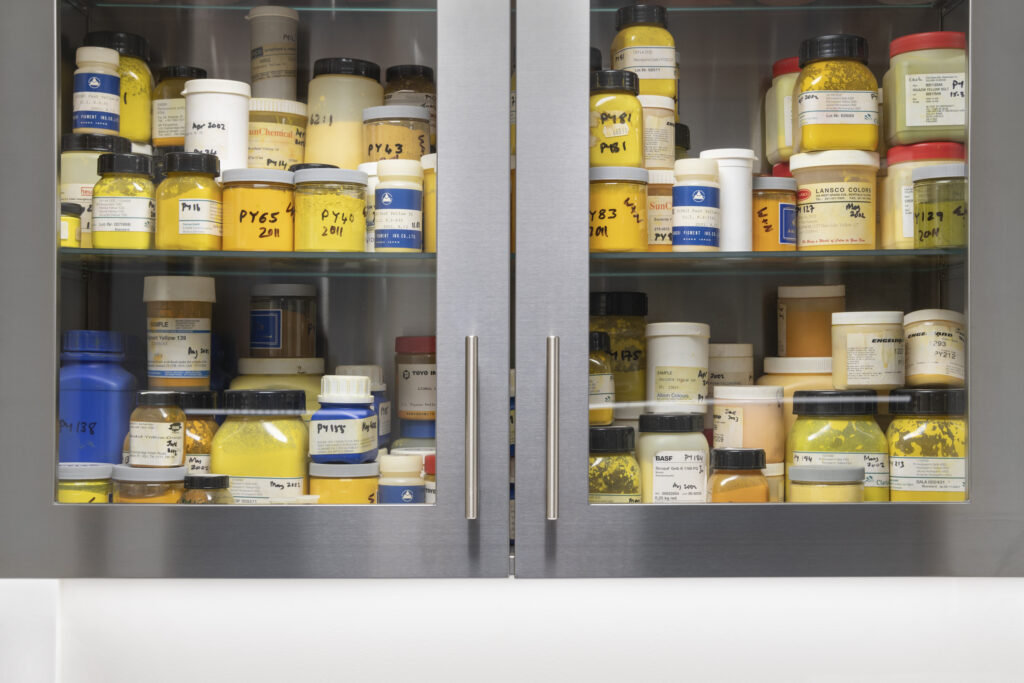
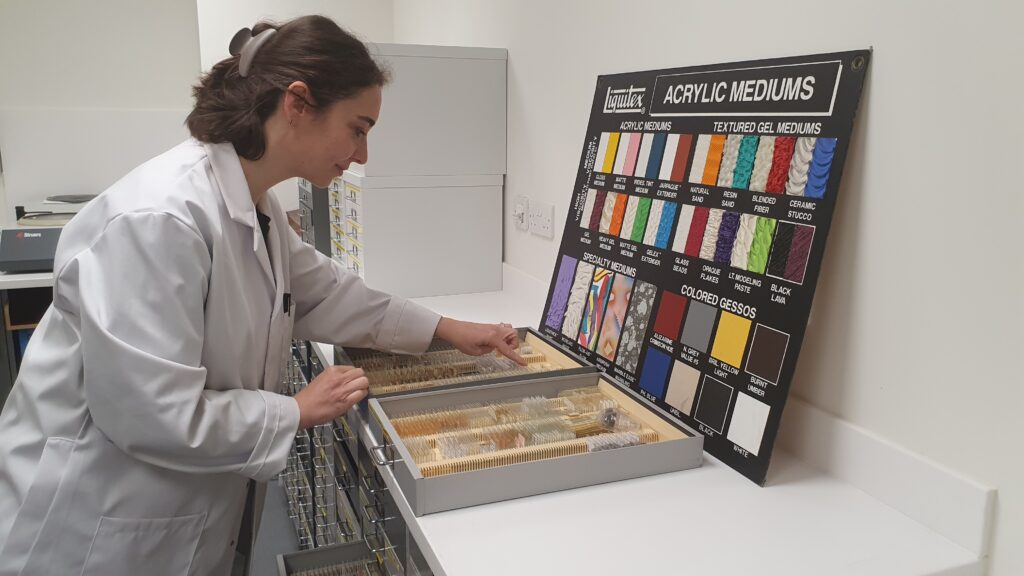
The Tate Conservation and Heritage Science Archive (CHSA) has been designed to aggregate Tate’s conservation and heritage science research resources, and to facilitate discovery of both digital and physical archive collections. The physical collections include project samples and mock-ups, our painting stretcher archive, Tate collection specific materials, pigment collections, Winsor and Newton oil and alkyd-based paint swatches, Ripolin paint swatches (1950–60), a range of modern and contemporary artists paint tubes, and paint media collections and painting supports. This also includes an ever-growing number of cross-sections, dispersions, and unmounted samples removed from Tate collection works. Digital assets consist of scientific and research output from the Conservation Science team and will be made discoverable via the collections management database, The Museum System (TMS) Conservation Studio. Work is ongoing to finalise the data cataloguing system, ingesting four decades worth of data and fine-tuning instrumental methodologies.
Supporting access
To support new collaborators, Tate are now offering a series of on-site open days where people can discover the facilities, equipment and parts of the Conservation and Heritage Science Archive held at Tate Britain in London. As part of the launch activities, the team have arranged facility tour dates (maximum of 10 people per tour) on the following dates:
- Wednesday 21 October – 10:00-11.30
- Wednesday 18 November – 11:30-13:00
Please book onto a tour via email: riches@tate.org.uk
These initiatives will enable organised, supported ongoing access to Tate’s well-equipped scientific labs, equipment and range of archival materials and data for the first time. Access is supported by the Conservation Science team, with enhanced capacity enabled through new RICHeS funded roles including a new heritage science data specialist.
The team at Tate look forward to working with the wider conservation and heritage science communities to explore and highlight these national modern and contemporary art collections. This research will generate new knowledge of artists’ materials and techniques, improving collections care and supporting new conservation strategies to safeguard these collections. Access requests and potential collaborative research across these areas are welcome, through the HSDS Catalogue of Services and supported by the RICHeS Access Fund.
To explore further visit Tate’s new RICHeS access webpage which launches on 1 September 2026!