
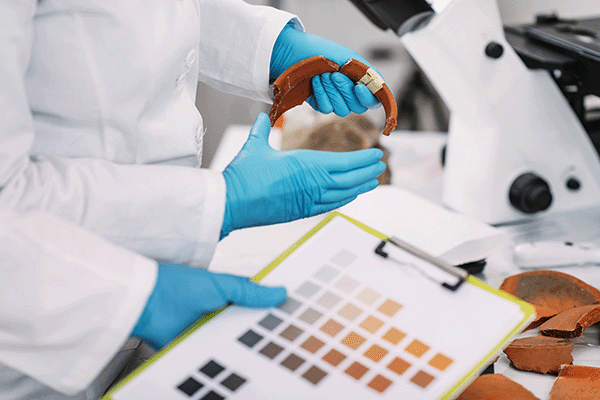
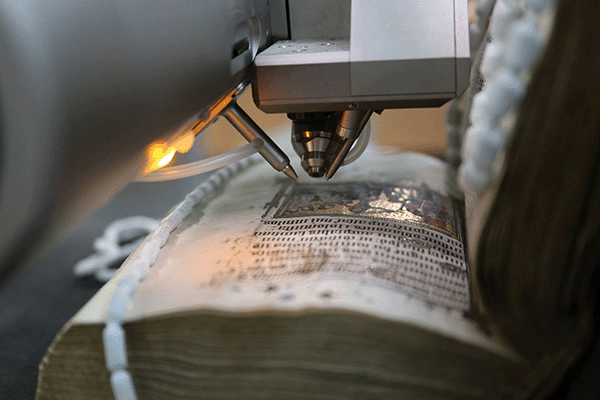



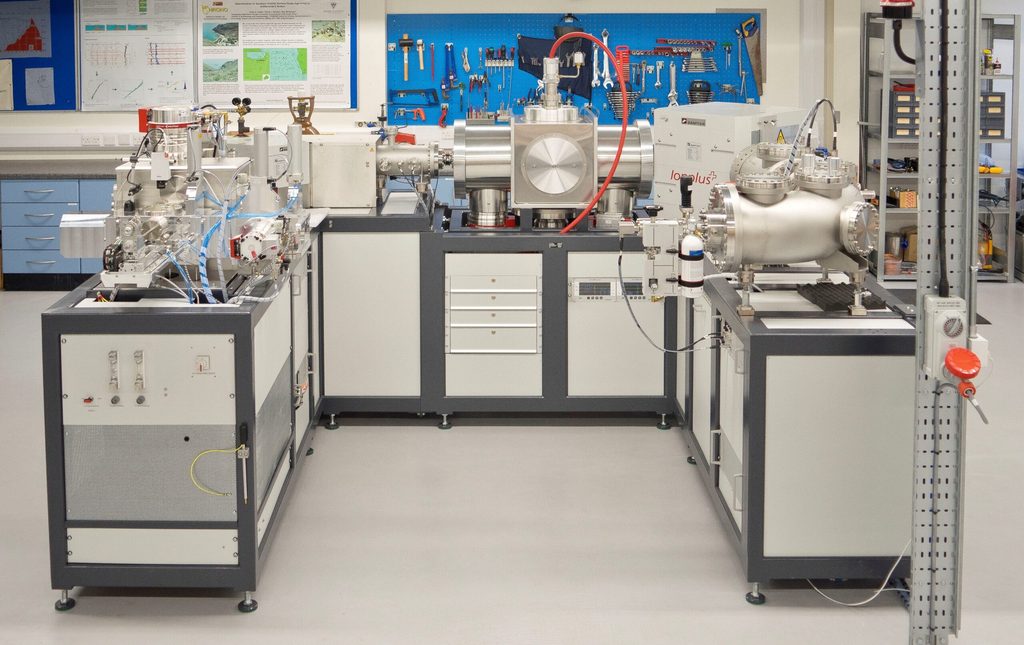
The Institute for Heritage and Environmental Science (IHES) RICHeS-funded investment at Queen’s University Belfast is open for access, bringing together world-leading facilities and expertise in heritage, conservation, and environmental science. The IHES is built around Queen’s internationally renowned 14CHRONO Centre, and its capabilities span chronological science – including radiocarbon dating, tephrochronology, dendrochronology, and lead-210 dating – alongside isotope geochemistry, materials characterisation, radiography, paleoenvironmental analysis, and archaeological survey.
Enabling access to advanced chronological science
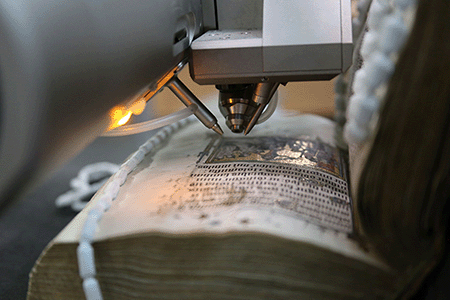
External access is already demonstrating how these complementary techniques can unlock new information from archaeological and museum collections. For example, radiographic analysis is allowing internal structures and manufacturing details to be examined non-destructively, revealing information that may otherwise remain hidden, and helping to inform conservation and sampling approaches.
A particular focus of the RICHeS investment has been to improve techniques for radiocarbon dating objects that have traditionally proved difficult to analyse because of previous conservation treatments. Consolidants, such as animal-based glues, can introduce additional sources of carbon that may affect the accuracy of radiocarbon dates. Thermogravimetric analysis-mass spectrometry (TGA-MS), Fourier transform infrared spectroscopy (FTIR), and X-ray fluorescence spectroscopy (XRF) are being used to identify these materials and reconstruct treatment histories. This allows pretreatment protocols to be tailored to individual objects, improving the reliability of radiocarbon dating and stable isotope analysis. Ramped pyrolysis provides a further way of addressing these challenging samples. By gradually heating a sample, different carbon components are released at different temperatures, helping researchers distinguish contaminants from endogenous carbon. This approach is particularly valuable for complex materials such as lime mortar.
Unlocking collections and landscapes
IHES is supporting a range of activities through the RICHeS Access Fund, including applying the ramped pyrolysis technique through the New Narratives of the Norman Conquest project with researchers at the Universities of Newcastle and Exeter. This project is dating mortar from Bosham Manor House in West Sussex, a residence of Harold Godwinson, which appears at the beginning of the Bayeux Tapestry.
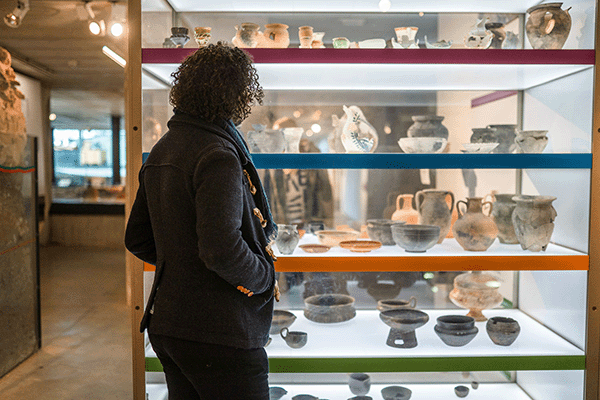
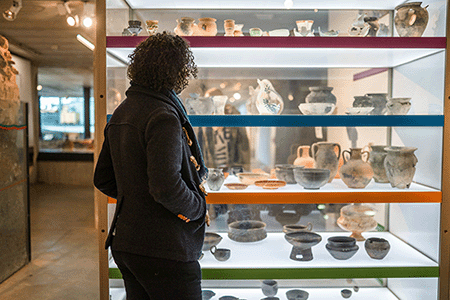
Closer to home, the IHES team has begun work with National Museums NI on Preserved in Peat: The Archaeology of Northern Ireland’s Bog Finds. This project is examining fifteen exceptional bog-preserved finds, including prehistoric textiles, wooden artefacts, and bog butters. Using a range of techniques, the team will investigate when and how these objects were manufactured, used, and deposited, and identify any unrecorded conservation treatments they may have received. The results will feed directly into National Museums NI’s public displays and interpretation, creating new ways for audiences to engage with Northern Ireland’s archaeological heritage.
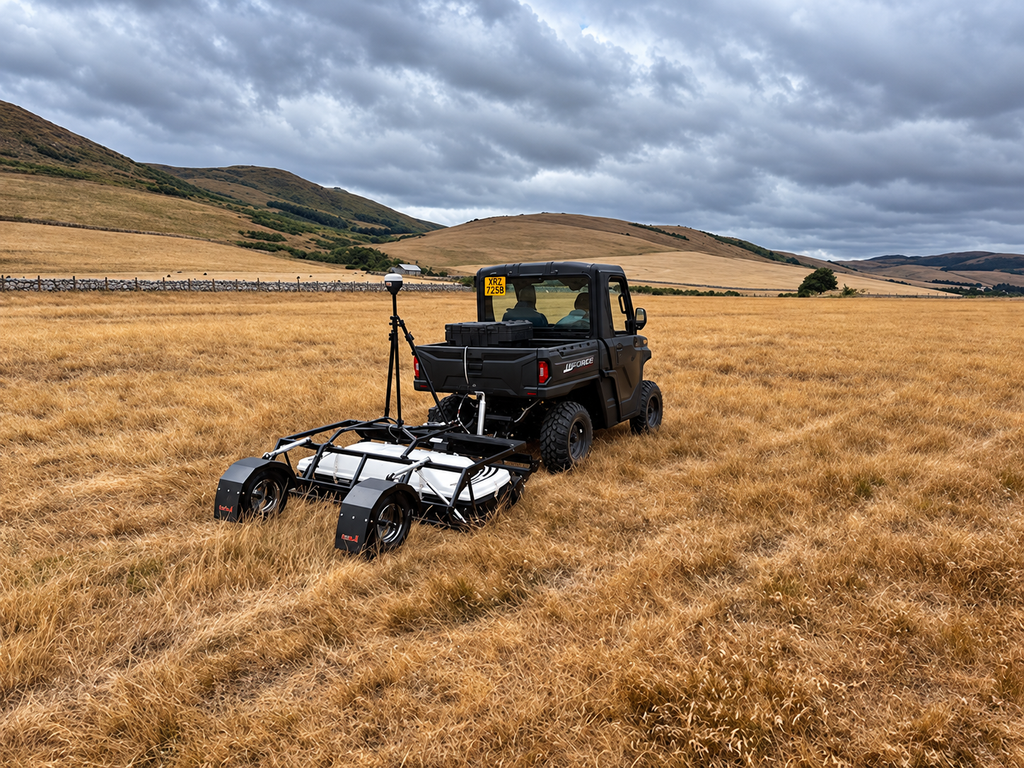
IHES facilities also extend beyond the laboratory, deploying ground-penetrating radar at Yeavering in Northumberland. In this project high-resolution survey is helping researchers investigate the wider landscape of this important early medieval royal centre and identify previously unresolved archaeological features.
Work with the IHES
The IHES welcomes working with academic researchers, museums, archaeological organisations, commercial partners, and community groups. The team can work with users from the earliest stages of project development, helping to refine research questions, identify appropriate analytical techniques, and develop sampling strategies, through to analysis, interpretation, and dissemination. Visit the HSDS Catalogue of Services to explore more and connect.